
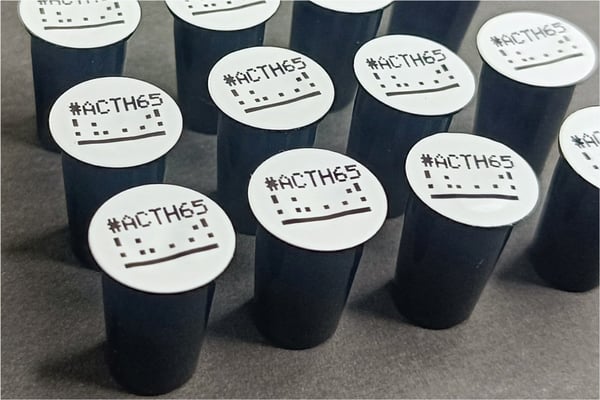
ST AIA-PACK ACTH
ST AIA-PACK ACTH is designed for in-vitro
Part #: 0025221
Manufacturers:
Description
Adrenocorticotropic hormone (ACTH) is a non-glycosylated 39-amino acid polypeptide hormone (MW 4,541 Daltons). ACTH is processed from pro-opiomelanocortin (POMC) in the anterior pituitary gland and is secreted to blood. The main biological function of ACTH is to increase the synthesis and release of all adrenal steroid hormones. ACTH secretion from the anterior pituitary gland is mainly controlled by the corticotropin releasing hormone (CRH) and the adrenal steroid hormones. CRH is secreted from a hypothalamus and promotes ACTH synthesis and release. Since the secretion of CRH has a circadian rhythm, ACTH levels fluctuate together; high level in every morning and low level in the evening. Based on such circadian rhythm, it has been recommended to collect blood at early morning for ACTH analysis. Furthermore, various types of stress reinforce the synthesis of CRH which stimulates to release ACTH and antidiuretic hormone or vasopressin (ADH) to enhance the stimulation of CRH. Secreted ACTH acts on the adrenal cortex to synthesis and release of adrenal steroid hormones such as cortisol. Cortisol at high concentration in blood acts on the hypothalamus and pituitary gland, and inhibits the synthesis and release of CRH, then ACTH (negative feedback). ACTH is controlled by factors on hypothalamic pituitary adrenal glands each other, the determination of ACTH level is useful in clinical investigation for diseases on the hypothalamic pituitary adrenal glands.
Technical specifications
| Kit name | ST AIA-PACK ACTH |
| Method | Enzyme Immunoassay (EIA) |
| Assay principle | Two-site immunoenzymometric assay |
| Assay sample | EDTA plasma |
| Calibrators | 0, 15, 50, 300, 800, 2200 pg/mL |
| Standardization | Internal |
| Calibration stability | 90 days |
| Assay range | 2 – 2000 pg/mL |
| Reaction time | 10 minutes |
| Hook effect | >10,00,000 pg/mL |
| Storage | 2 - 8oC |
Refer to the product Instruction-For-Use (IFU) for complete details.