
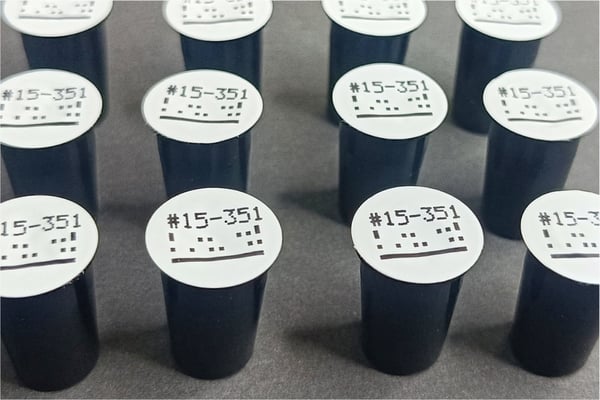
ST AIA-PACK CA 15-3
ST AIA-PACK CA 15-3 is designed for in-vitro diagnostic use for the quantitative measurement of breast cancer antigen (CA 15-3) in human serum or heparinized plasma on TOSOH AIA systems.
Part #: 0025201
Manufacturers:
Description
Breast carcinoma-associated antigen coded by the human MUC-1 gene is identified by several names including MAM 6, milk mucin, CA 15-3. This antigen is a glycoprotein (Molecular weight 300-450 kDa) which contains 20-amino-acid tandem repetitive sequence of the mucin core and carbohydrate of more than half of the molecule. The number of tandem repeats and the degree of glycosylation is variable between individuals, so that CA 15-3 is very heterogeneous in structure. In malignant cells, CA 15-3 is overexpressed on the entire cell surface and increasing amounts are shed into the circulation. Tumors involving glandular organs, such as the breast, can produce high concentration of CA 15-3 in blood, making it useful as a tumor marker.
Monoclonal antibodies that recognized distinct epitopes on CA 15-3 antigen molecules have been used to develop immunoassays. ST AIA-PACK CA 15-3 was developed with a monoclonal antibody that recognized 8 amino acids in the tandem repeat portion of the polypeptide chain. The antigen levels correlated closely with disease regression or progression, CA 15-3 proved reliable in the follow-up of patients with advanced breast cancer.
Technical specifications
| Kit name | ST AIA-PACK CA 15-3 |
| Method | Enzyme Immunoassay (EIA) |
| Assay principle | Two-site immunoenzymometric assay |
| Assay sample | Serum or heparinized plasma |
| Calibrators | 0, 1.2, 2.4, 4.8, 9.5, 21 U/mL |
| Standardization | Internal |
| Calibration stability | 90 days |
| Assay range | 0.10 – 19.05 U/mL |
| Reaction time | 10 minutes |
| Hook effect | >20,000 U/mL |
| Storage | 2 - 8oC |
Refer to the product Instruction-For-Use (IFU) for complete details.