Tosoh Biosciences Separation and Purification Key Image

Connecting Minds. Touching Lives.

We are dedicated to creating cutting-edge chromatography solutions for our partners to provide safe and efficient therapies against life-threatening diseases.


High Performance Liquid Chromatography

High Performance Liquid Chromatography (HPLC) uses a liquid mobile phase to transport the sample components through a column packed with a solid material; the stationary phase. The "mode" of chromatography is usually defined by a combination of a certain stationary phase type with a certain mobile phase type. In order to generate a chromatogram that is suitable for qualitative or quantitative purposes, bonded phase chemistry and column and packing dimensions are one of several parameters that need to be optimized.

TSKgel® Chromatography Columns

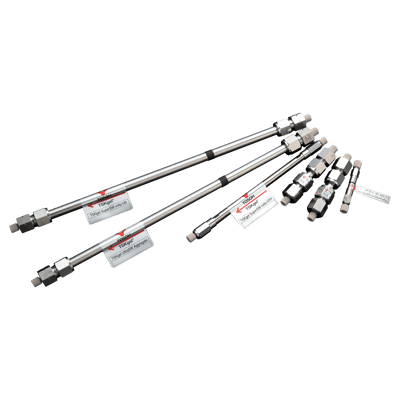
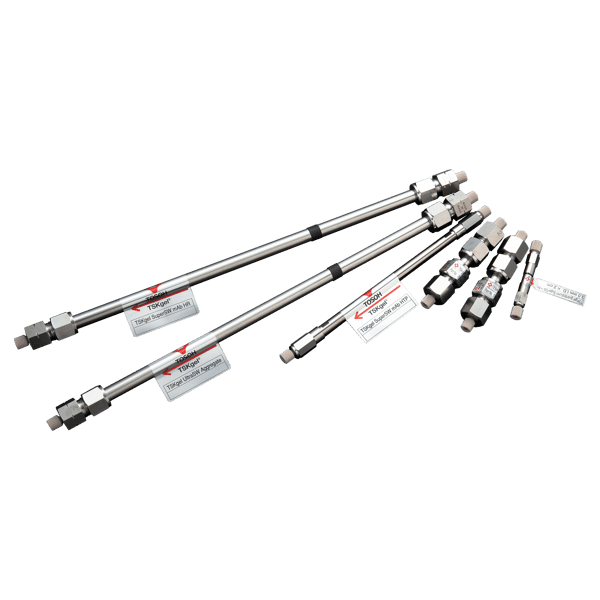
Tosoh Bioscience offers a comprehensive line of high and low pressure TSKgel® HPLC columns for use with conventional and UHPLC systems to meet your purification needs. The TSKgel® product line include columns in nearly every mode of HPLC, including Size Exclusion, Ion Exchange, Reversed Phase, Hydrophobic Interaction, Affinity, and Normal Phase/HILIC.


Click on each mode listed below for a short tutorial on the mode, as well as the variety of TSKgel columns offered in that mode.
Frequently Asked Questions

General FAQs

What industries does Tosoh Bioscience serve?

Lorem ipsum dolor sit amet, consectetur adipiscing elit, sed do eiusmod tempor incididunt ut labore et dolore magna aliqua. Ut enim ad minim veniam, quis nostrud exercitation ullamco laboris nisi ut aliquip ex ea commodo consequat. 

What types of chromatography products does Tosoh Bioscience offer?

Lorem ipsum dolor sit amet, consectetur adipiscing elit, sed do eiusmod tempor incididunt ut labore et dolore magna aliqua. Ut enim ad minim veniam, quis nostrud exercitation ullamco laboris nisi ut aliquip ex ea commodo consequat. 

Does Tosoh Bioscience provide technical support and application guidance?

Lorem ipsum dolor sit amet, consectetur adipiscing elit, sed do eiusmod tempor incididunt ut labore et dolore magna aliqua. Ut enim ad minim veniam, quis nostrud exercitation ullamco laboris nisi ut aliquip ex ea commodo consequat. 

How can I request a quote or product sample from Tosoh Bioscience?

Lorem ipsum dolor sit amet, consectetur adipiscing elit, sed do eiusmod tempor incididunt ut labore et dolore magna aliqua. Ut enim ad minim veniam, quis nostrud exercitation ullamco laboris nisi ut aliquip ex ea commodo consequat. 

Chromatography Modes

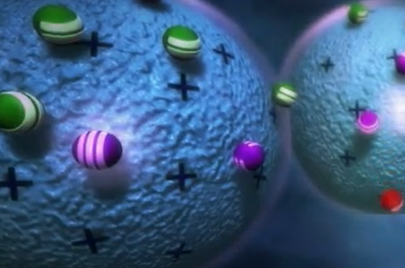
  • Separation in Ion Exchange chromatography (IEC or IEX) is based on reversible adsorption of charged solute molecules to immobilized functional groups of opposite charge. Biomolecules generally have charged groups on their surfaces, which change with the buffer pH. Elution can be accomplished by changing the ionic strength or the pH, of which changing the ionic strength by increasing the salt concentration is most common.

    IEC is further subdivided into cation exchange and anion exchange chromatography. Anion and cation exchange phases are classified as strong or weak, depending on how much the ionization state of the functional groups vary with pH.  A strong ion exchange phase has the same charge density on its surface over a broad pH range, whereas the charge density of a weak ion exchange phase changes with pH, affecting its selectivity, which differs at different pH values.

    Applications

    Being a non-denaturing technique, IEC is one of the most frequently used modes in the separation of biomolecules. Proteins have numerous functional groups that can have both positive and negative charges. IEC separates proteins according to their net surface charge, which is dependent on the pH and ionic strength of the mobile phase.

    Typical applications are

    • Separation of peptides and proteins
    • Analysis of charge isomers of proteins
    • Quality control of recombinant proteins, such as monoclonal antibodies (mAbs)
    • Separation of oligonucleotides, siRNA, PCR fragments and related nucleic acids
    • Analysis of sugars, amino acids, nucleic acid bases, and small drug candidates


    TSKgel® Ion Exchange Columns

    Tosoh Bioscience offers a broad line of high efficiency columns for anion as well as cation exchange chromatography.

    The product line contains methacrylate and silica-based columns for the analysis of proteins, peptides, and nucleic acids. Polystyrene divinylbenzene-based ion exchange columns are available for analyzing low molecular weight sugars and drug candidates, as well as amino acids. Hydrophilic polymer-based columns packed with non-porous resin particles are available for the separation of protein, protein aggregates, PEGylated proteins and charge isomers of mAbs.


    Anion Exchange Chromatography

    Anion exchange chromatography is practiced with either a strong or a weak anion exchange column, containing a quarternary ammonium ion, or with a weak anion exchanger, having either a tertiary or secondairy amine functional group, such as DEAE (diethylaminoethyl). A counter ion, often Cl-, maintains electroneutrality.

    In ion exchange chromatography the pH of the mobile phase buffer must be between the pI or pKa of the charged molecule and the pKa of the charged groups on the solid support. For instance, in anion exchange chromatography a molecule with a pI of 6.8 is run in a mobile phase buffer at pH 8.0 with the solid support pKa at 10.3.

    TSKgel® Column Type

    Benefit

    Q-STAT, DNA-STATNon-porous with high surface density of quaternary ammonium groups

    DEAE-5PW, SuperQ-5PW
     

    Polymethacrylate resin derivatized with diethylaminoethyl (DEAE) and trimethylamino (SuperQ) ligands
     

    BioAssist Q

    Contain very large pores (400 nm), resulting in high binding capacity and improved recovery of activity; available exclusively in PEEK housing

    DEAE-NPR, DNA-NPR

    Non-porous resin with 2.5 µm particles; fast analysis; high protein recovery
     

    DEAE-2SW, DEAE-3SW,       QAE-2SWSilica-based with diethylaminoethyl (DEAE), and trimethylamino (QAE) functional groups
    Sugar AXG, Suger AXI, SAXSpecialty columns for the analysis of mono and disaccharides, as well as organic acids and sugar alcohols


    Cation Exchange Chromatography

    Cation exchange chromatography is practiced with either a strong or a weak cation exchange column, containing a sulfonium ion, or with a weak cation exchanger, having usually a carboxymethyl (CM) functional group. A counter ion, often Na+, maintains electroneutrality.

    In ion exchange chromatography the pH of the mobile phase buffer must be between the pI or pKa of the charged molecule and the pKa of the charged groups on the solid support. For example, a molecule with a pI of 8.2 is run in a mobile phase buffer at pH 6.0 with the solid support pKa at 1.2 in cation exchange chromatography.

    TSKgel® Column Type

    Benefit

    CM-STAT, SP-STATNon-porous with high surface density of carboxymethyl (CM) and sulfopropyl (SP) groups

    CM-5PW, SP-5PW
     

    Polymethacrylate resin derivatized with carboxymethyl (CM) and sulfopropyl (SP) ligands
     

    BioAssist SContain very large pores (130 nm), resulting in high binding capacity and improved recovery of activity; available exclusively in PEEK housing

    SP-NPR
     

    Non-porous resin with 2.5 µm particles; fast analysis; high protein recovery
     

    CM-2SW, CM-3SW, SP-2SWSilica-based with carboxymethyl (CM) and sulfopropyl (SP) functional groups
    SCX, OApak-ASpecialty columns for the analysis of organic acids, saccharides and alcohols


    TSKgel® Anion Exchange Chromatography Columns

    Very efficient chromatography can be achieved with the non-porous TSKgel® STAT columns due to the novel bonding chemistry and the absence of micro-pores. Applications for the TSKgel® Q-STAT columns include the separation of: proteins, peptides, low molecular weight nucleic acids, aggregates and charge isomers of monoclonal antibodies, PEGylated proteins, oligo DNA, and siRNA. The TSKgel® DNA-STAT column is ideal for the analysis of DNA fragments, nucleic acids and nucleotides.

    The pore structure and bonding chemistry of TSKgel® BioAssist Q columns provides high capacity for small to very large molar mass proteins and nucleic acids.

    Proteins, peptides, DNA and RNA-derived oligonucleotides, and other nucleic acid fragments are typical samples that are analyzed or isolated on the TSKgel® DEAE-5PW and TSKgel® SuperQ-5PW columns.

    TSKgel® DEAE-NPR (non-porous resin) columns are used for the high speed separation and analysis of proteins and poly and oligonucleotides. Applications for the TSKgel® DNA-NPR (non-porous resin) columns include the high efficiency separation of DNA fragments, PCR products, or plasmids.

    TSKgel® DEAE-2SW and TSKgel® QAE-2SW (both 5 µm, 12.5 nm) and TSKgel® DEAE-3SW (10 µm, 25 nm) are available for analyzing smaller molar mass samples such as nucleotides, drug candidates, catecholamines, and small peptides or proteins.

    TSKgel® Sugar AXG columns are packed with 10 µm beads and are used for the gradient separation and analysis of monosaccharides, disaccharides, and sugar alcohols.
     

    For isocratic separation of carbohydrates where lower and constant back pressures may be generated, the 8 µm TSKgel® Sugar AXI column is optimal.

    TSKgel® SAX columns are used for the separation of isomerized sugars, alcohols, and low molar mass organic acids.


    TSKgel® Cation Exchange Chromatography Columns

    Very efficient chromatography can be achieved with the non-porous TSKgel® STAT columns due to the novel bonding chemistry and the absence of micro-pores. Applications for the TSKgel® CM-STAT and TSKgel® SP-STAT columns include the separation of proteins, protein aggregates,charge variants of monoclonal antibodies, PEGylated proteins, and peptide digests.

    The pore structure and bonding chemistry of TSKgel® BioAssist S columns provides high capacity for medium to large molar mass proteins.

    TSKgel® CM-5PW and TSKgel® SP-5PW columns are an excellent choice for analyzing biologically active molecules.

    TSKgel® SP-NPR (non-porous resin) columns are used for the separation and analysis of proteins and peptides. They are particularly useful for adeno-associated viruses and other large macromolecules.

    TSKgel® CM-2SW and TSKgel® SP-2SW (both 5 µm, 12.5 nm) and TSKgel® CM-3SW (10 µm, 25 nm) are available for analyzing smaller molar mass samples such as nucleotides, drug candidates, catecholamines, and small peptides or proteins.

    TSKgel® SCX columns are used for the separation and analysis of organic acids, saccharides and alcohols.

    TSKgel® OApak-A columns are optimized for the separation and analysis of organic acids by an ion-exclusion mechanism. Applications include: organic acids in fruit juices, wine, beer, coffee, and salt solutions.

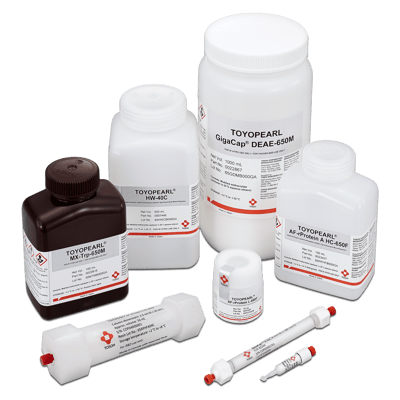
  • Size Exclusion Chromatography (SEC) separates molecules based on their size, or more precisely, their hydrodynamic volume. It is based on the discrimination of individual sample components by the pores of the packing material. Large sample molecules cannot or can only partially penetrate the pores and elute from the column first, whereas smaller molecules can access all or a larger number of pores and elute later. SEC is the only mode of chromatography that does not involve interaction with a stationary phase by means of adsorption or partitioning of the solutes.
    The terms SEC, GFC (gel filtration chromatography) and GPC (gel permeation chromatography) all refer to the same chromatographic technique. In GFC an aqueous mobile phase is used, while an organic mobile phase is employed in GPC. The general term SEC covers both uses.
     

    Applications

    SEC is the dominant mode of separation for natural and synthetic polymers: 

    • GFC is the term used for the size-based separation of  water-soluble polymers, for example biopolymers or natural polymers.

    • GPC is the term used for the size-based separation of polymers soluble in organic solvents.
       

    TSKgel® SEC Columns

    Size exclusion chromatography columns are traditionally packed with porous polystyrene divinylbenzene (PS-DVB) or silica particles.  PS-DVB columns are commonly used for the analysis of synthetic polymers in organic solvents, while silica-based columns are used for the separation of biopolymers.  


    Aqueous SEC - Gel Filtration Chromatography

    Gel Filtration Chromatography (GFC) is popular among biochemists for the isolation of proteins, for the removal of aggregates, to desalt a protein sample, to separate nucleic acid fractions, or to characterize water-soluble polymers used in food products, paints, pharmaceutical preparations, etc.

    The TSKgel® SW-type silica-based columns, first introduced in 1977, are the standard in gel filtration chromatography.

    TSKgel® PW-type columns are the ideal choice for analyses of water-soluble polymers. All TSKgel® PW-type gel filtration columns are prepared from polymethacrylate resin.


    Proteins

    TSKgel® UP-SW columns consist of varying pore sizes (from 12.5 to 30 nm), allowing for the analysis of small to very large molecular weight biopharma products. This range of products analyze small proteins, peptides and oligonucleotides, monoclonal antibodies, and high order mAb aggregates, high molecular weight (MW) proteins and nucleic acids. These columns are compatible with HPLC and UHPLC systems, and the TSKgel® UP-SW-LS columns are optimized for light scattering and mass spectrometry detection.

    The TSKgel® SW mAb products consist of three specialized columns designed for the analysis of monoclonal antibodies (mAbs). Compared to competitive columns, these stainless steel, silica-based TSKgel® columns offer reduced lot-to-lot variation, long column life, reduction of unspecified adsorption, and superior recovery of aggregates.

    TSKgel® SW, SWXL and SuperSW columns are silica-based columns optimized for the separation of proteins and nucleic acids using an aqueous buffer as the mobile phase. A hydrophilic diol-type bonded phase shields the silica surface from interacting with protein samples. Compared to competitive HPLC columns, TSKgel® SW-type columns contain more pore volume per unit column volume, which results in higher molar mass (MM) selectivity or better resolution. The columns within the TSKgel® SW-type group differ in pore size, offering the ability to separate a wide range of compounds of varying molar mass. 

    TSKgel® BioAssist DS columns are designed for the desalting and buffer exchange of proteins and polynucleotides at semi-preparative scale.

    TSKgel® Column Type

    Particle Size (µm)

    Benefit

    UP-SW

    2, 3

    Range of pore sizes for analysis of small to large MW biopharma products; dual functionality for use with both HPLC and UHPLC systems
    SW mAb3, 4High resolution/high throughput analysis of monoclonal antibody monomer, fragments, and higher order mAb aggregates
    SW

    10, 13, 17

    High sample capacity; semi-prep dimensions available; 60 cm L available for higher resolution

    SWXL5, 8Most popular and most versatile; 15 cm L available for high speed; available in PEEK housing for biomolecules and ionic compounds
    SuperSW

    4

    4.6 mm ID for increased sensitivity and efficiency in sample-limited cases, reduced solvent consumption

    BioAssist DS15Quick and efficient removal of salts, detergents and denaturants from sample formulation


    Water-soluble polymers

    The TSKgel® PW columns contain particles of 12 and 17 µm and deliver high resolution separations. TSKgel® PWXL columns are of smaller particle size than the TSKgel® PW columns, offering higher efficiency for optimal resolution. 

    The main application areas for TSKgel® PW and PWXL columns are the analysis of celluloses, acrylamides, glycols, dextrans, polyvinylalcohol, and oligosaccharides. Both the TSKgel® PW and PWXL column lines include a mixed bed column, prepared by mixing particles of different pore sizes, which results in columns with an extended linear calibration curve. These columns are useful as scouting columns, to quickly categorize the molar mass (MM) profile of an unknown sample. Additionally, mixed bed TSKgel® PW and PWXL columns are highly useful in the characterization of samples having a very broad MM distribution.

    Three specialty columns are available within the TSKgel® PWXL column line.  TSKgel® G-DNA-PW is designed for the separation of large polynucleotides, such as DNA and RNA fragments of 500-5,000 base pairs. TSKgel® G-Oligo-PW is the preferred column for the analysis of oligosaccharides.  TSKgel® SuperOligoPW contains smaller particles and semi-micro dimensions compared to the TSKgel® G-Oligo-PW column, enabling high speed separations with high resolution of aqueous oligomers.

    TSKgel® PWXL-CP columns were specifically designed for the analysis of water-soluble cationic polymers. Cationic groups are introduced on the surface of the TSKgel PWXL-CP packing material to prevent undesirable interaction of cationic polymers and allow elution under low salt conditions.

    TSKgel® SuperMultipore PW columns are packed with particles containing a wide range of pore sizes. The unique multi-pore technology creates a linear calibration curve within each particle, resulting in better accuracy for molar mass determination.

    TSKgel® Column Type

    Particle Size (µm)

    Benefit

    PW12, 17Larger particle sizes for analyses when time is not critical or sample mass is not limited; mixed bed column available for scouting purposes
    PWXL3, 7, 10, 13High efficiency for optimal resolution, reduced analysis time due to smaller particle sizes; mixed bed and specialty columns available
    PWXL-CP7, 10, 13Improved recovery and separation of cationic polymers
    SuperMultiporePW4, 5, 8Unique multi-pore particles for improved linearity; three columns available, allows wide separation range from high MM polymers to oligomers


    Organic SEC - Gel Permeation Chromatography 

    Gel Permeation Chromatography (GPC) plays an important role in the characterization of industrial organic-soluble and polar organic-soluble polymers in the consumer, chemical and petrochemical industries.

    TSKgel® Alpha and TSKgel® SuperAW columns are designed for the GPC analysis of polymers of intermediate polarity. These columns contain highly crosslinked hydroxylated polymethacrylate particles which minimize swelling in polar organic solvents.

    TSKgel® H series GPC columns are optimized for the analysis of organic-soluble polymers and are packed with porous spherical polystyrene divinylbenzene (PS-DVB) particles. This series includes TSKgel® HXL, HHR, SuperH, SuperHZ, and SuperMultiporeHZ columns. Each line of columns within this series differs in degree of inertness, solvent compatibility and operating temperature range.


    Polar-organic soluble polymers

    The TSKgel® Alpha and SuperAW columns offer excellent stability in 100% aqueous to 100% organic solvents.  Both column types are highly applicable for polymers solubilized in methanol, acetonitrile, DMSO, isopropanol, THF and HFIP. Examples of applications include cleansing gel in methanol, degree of saponification of polyvinylalcohol in HFIP, and sodium dodecylsulfate, polyimide, as well as cellulose derivatives in DMF with 10 mmol/L LiBr.

    A mixed bed column is available in each of the TSKgel® Alpha and SuperAW column line, which is prepared by mixing particles of different pore sizes, resulting in columns with an extended linear calibration curve. These columns are useful to quickly categorize the molar mass (MM) profile of an unknown sample and are used when a sample has a very broad MM distribution.

    For high throughput applications, the smaller dimensions of the TSKgel® SuperAW columns provide equivalent resolution in half the time and with minimal solvent waste compared to the TSKgel® Alpha columns.

    TSKgel® Column Type

    Particle Size (µm)

    Benefit

    Alpha7, 10, 13Stable in a wide variety of 100% aqueous and 100% organic solvents; mixed bed column available for scouting purposes
    SuperAW4, 6, 7, 9Smaller dimensions allow for high efficiency, high speed analysis; mixed bed column available for scouting purposes


    Organic-soluble polymers

    The TSKgel® HXL columns are conventional GPC columns of 7.8 mm ID × 30 cm. These columns show true size exclusion behavior for most polymers, have limited solvent compatibility and maximum operating temperatures of 60 and 80 °C. Included in the TSKgel® HXL column line are three mixed bed columns and a multi-pore column. Mixed bed columns contain particles with different pore sizes, providing an extended linear calibration curve. The multi-pore column provides a linear calibration curve due to each particle containing a range of pore sizes. One of the mixed bed columns is available for high temperature analysis up to 140 °C. 

    TSKgel® SuperHZ columns are designed for high throughput/high efficiency GPC applications.  These columns are based on the TSKgel® HXL column line, differing only in dimensions (4.6 and 6.0 mm ID × 15 cm) and particle size. 

    TSKgel® HHR columns are available in 7.8 mm ID x 30 cm and are compatible with a broad range of solvents.  As with the TSKgel® HXL columns, the TSKgel® HHR column line consists of four mixed bed columns with maximum operating temperatures of 80 °C.  The remaining columns within the TSKgel® HHR line can be used up to 140 °C. In addition, nine TSKgel® HHR columns are available for high temperature and ultra-high temperature analysis, with maximum operating temperatures of 140 °C and 220 °C, respectively.

    TSKgel® SuperH columns are high efficiency/high throughput versions of the conventional TSKgel® HHR columns. These columns are 6.0 mm ID × 15 cm with maximum operating temperatures of 140 °C and can be used in a broad range of solvents.

    Tosoh's innovative multi-pore technology, used in TSKgel® SuperMultiporeHZ columns, produces particles that contain a broad range of pore sizes. The semi-micro dimensions of these columns, 4.6 mm ID × 15 cm, offer high speed analysis and low solvent consumption with precise results.

    TSKgel® Column Type

    Particle Size (µm)

    Benefit

    HXL5, 9Conventional polymer analysis with ultra-low polymer adsorption; limited solvent compatibility range
    SuperHZ3, 10High throughput polymer analysis with ultra-low polymer adsorption; limited solvent compatibility range
    HHR 5, 13, 20, 30Conventional polymer analysis with expanded solvent compatibility range
    SuperH 3, 5High throughput polymer analysis with expanded solvent compatibility range
    SuperMultiporeHZ 3, 4, 6Ultra-high performance with low dead volume and wide pore distribution in each particle for superior linearity


  • Starting in the mid 1970s Reversed Phase Liquid Chromatography (RPC) has become the standard technique to analyze small molecular weight compounds. More recently, RPC has become an accepted tool for the separation of peptides, proteins and other biopolymers in the pharmaceutical, chemical and biochemical industries.

    RPC separates molecules based on nonpolar interactions and requires a nonpolar stationary phase and a polar mobile phase. Typically the mobile phase consists of a mixture of water (buffer) and acetonitrile, methanol, THF, or 2-propanol.

    Applications

    RPC can be applied to the analysis of a wide variety of compounds, ranging from neutral polar and nonpolar solutes to acidic, basic, and amphoteric compounds. RPC is also an efficient technique for the analysis of derivatized amino acids, peptides and proteins, although protein structure is not always maintained due to the high concentration of organic solvent required for their elution.

    TSKgel® Reversed Phase Columns

    Silica particles are most commonly used as the support in TSKgel reversed phase columns, which is then derivatized with octadecylsilane (ODS, C18) or smaller hydrocarbon chains such as C1 (Methyl), C4 (Butyl), C5 (Phenyl), or C8 (Octyl).

    Polymer-based supports have been introduced as an alternative to TSKgel silica-based reversed phase columns, particularly for analyzing basic compounds in their neutral state at high pH.

    Silica-based Columns

    The silica-based TSKgel® reversed phase column line offers a variety of stationary phased designed for the analysis of either large molecules, such as peptides, proteins and oligonucleotides, or low molar mass analytes, such as:

    • pharmaceutical drugs
    • forensic compounds
    • derivatized amino acids
    • carbohydrates
    • steroids, lipids, fatty acids

    TSKgel® silica-based reversed phase columns are grouped into 6 product families:

    TSKgel® Column Type

    Particle Size
    (µm)

    Benefit

    Monomeric Bonded Silica (8 nm)5, 10General purpose columns; 8 nm pores allows fast mass transfer of solutes in the 100-6,000 Da molar mass range
    ODS 100V and 100Z (10 nm)3, 51st choice for general purpose columns; two levels of hydrophobicity: 15% (V), 20% (Z)
    High Efficiency (14 nm)2Superior resolution and speed; improved sensitivity; savings in time and solvent usage
    Specialty Silica Columns5, 10Provides optimum separation for oligonucleotides, polyaromatic hydrocarbons, synthetic peptides
    ODS-140HTP for High Throughput2.3
    High throughput separations; high resolution and short analysis time at moderate pressures
    TMS-250 and Protein C4-300 3, 10Ideal for separation of large biomolecules, such as proteins


    Methacrylate-based Columns

    The polymethacrylate-based TSKgel® reversed phase columns are available in a range of pore and particle sizes. Key advantages of these polymer-based columns include:

    • Chemically stable from pH 2 to 12, allowing many basic compounds to be analyzed in their uncharged form, thus reducing secondary adsorption and improving peak shape

    • Improved recovery for peptides and proteins due to reduced secondary interactions

    The TSKgel® polymer-based reversed phase columns are an excellent choice for large molecular weight (MW) biomolecules (>10,000 Da) and for analyzing small MW compounds at high pH and are offered in 4 different chemistries.

  • Hydrophobic interaction chromatography (HIC) is driven by non-polar interactions between a non-polar stationary phase and molecular hydrophobicity exposed by a high salt concentration mobile phase. Chaotropic salts in the mobile phase significantly alter hydration patterns around analytes in solution, forcing hydrophobic regions to reorganize and variably interact with a weakly non-polar stationary phase. Analytes generally elute in order of most hydrophilic to most hydrophobic, facilitated by decreasing salt concentration in the mobile phase. Low percentages of organic solvent in the mobile phase can be utilized to facilitate elution for strongly binding species.

    Applications

    HIC is generally considered a non-denaturing separation technique for biologics analysis, typically preserving tertiary and quaternary-structural interactions within proteins, antibodies, and nucleic acids. It is applied for protein separations, protein purifications, DNA and RNA isoform analyses, viral clearance for AAVs, analysis of monoclonal (mAbs) and bispecific antibodies (bsAbs), and analysis of Antibody-Drug Conjugates (ADCs).

    HIC Solutions

    TSKgel® HIC columns contain polymer-based stationary phases linked with a variety of hydrophobic ligands suitable for protein, DNA, and antibody-based applications.

    TSKgel® HIC-ADC columns contain polymer-based stationary phases with novel grafting chemistries targeted specifically for resolving structural features of variably conjugated ADC isoforms.


    TSKgel® HIC Columns

    TSKgel® HIC columns are polymethacrylate-based columns with particles functionalized with butyl, ether, or phenyl ligands, each constructed with unique ligand densities and sample loading capacities.

    TSKgel®  HIC Column

    Hydrophobicity

    Porosity

    Organic Solvent Tolerance

    Butyl-NPRLeastNon-porous50%
    Ether-5PWIntermediatePorous50%
    Phenyl-5PWMostPorous50%


    • TSKgel® Butyl-NPR columns contain non-porous particles bonded with butyl ligands. These columns are the best choice for high-speed separations of proteins and biotherapeutics, allowing quantitation and recoveries down to nanogram levels.

    Particle Size (mean):

    2.5 µm 

    Pore Size (mean):

    non-porous

    pH Range:

    2.0 - 12.0

    Functional Group:

    Butyl


    • TSKgel® Ether-5PW columns contain porous particles bonded with ether ligands. These columns are resistant to acid and caustic cleaning treatments, providing alternate selectivity suitable for membrane protein separations and large proteins.

    Particle Size (mean):

    10 µm 

    Pore Size (mean):

    100 nm

    pH Range:

    2.0 - 12.0

    Functional Group:

    Ether


    • TSKgel® Phenyl-5PW columns feature porous particles bonded with phenyl ligands. These columns are suitable choices for DNA and RNA separations. They also offer alternate selectivity for very hydrophobic proteins and mAbs containing high abundances of aromatic amino acids.
       

    Particle Size (mean):

    10, 13 and 20 µm 

    Pore Size (mean):

    100 nm

    pH Range:

    2.0 - 12.0

    Functional Group:

    Phenyl


    TSKgel® HIC-ADC Columns – for antibody-drug-conjugate (ADC) analysis

    The name gives it away: TSKgel® HIC-ADC columns are hydrophobic interaction chromatography (HIC) columns designed for the analysis of Antibody-Drug Conjugates (ADCs). Tosoh has developed a new particle construction to achieve exceptional separation of variably conjugated ADC variants. This next-generation breakthrough in non-porous particle technology makes DAR analysis more reliable and improves separation efficiency. The TSKgel® HIC-ADC columns set a new industry standard with respect to the following characteristics.

    • Superior separation performance
    • Fast analyses (e.g. DAR determination in 7 minutes)
    • Reliability and lifetime
    • Ligand selection for diverse molecules: Phenyl (high hydrophobicity), Butyl (mid hydrophobicity)

    The columns simplify method development and tech-transfer processes for DAR analyses, enhancing both the accuracy and efficiency of Quality Control processes, and enabling the highest quality standards in ADC analysis.

    TSKgel® HIC-ADC Column

    Porosity

    Organic Solvent Tolerance

    HIC-ADC ButylNon-porous50%
    HIC-ADC PhenylNon-porous50%


    • TSKgel® HIC-ADC Butyl columns contain non-porous particles bonded with butyl ligands. These columns are specifically designed to retain ADC’s, enhancing resolution among variably conjugated ADC isoforms.

    article Size (mean):

    5 µm 

    Pore Size (mean):

    non-porous

    pH Range:

    2.0 - 12.0

    Functional Group:

    Butyl


    • TSKgel® HIC-ADC Phenyl columns are an alternate selectivity option to TSKgel HIC-ADC Butyl suitable for antibody-oligonucleotide conjugates (AOCs) and various hydrophilic targets.

    Particle Size (mean):

    5 µm 

    Pore Size (mean):

    non-porous

    pH Range:

    2.0 - 12.0

    Functional Group:

    Phenyl


  • Affinity Chromatography (AFC) offers the greatest potential specificity and selectivity for the isolation or purification of biomolecules. Almost all biological molecules can be purified on the basis of a specific interaction between their chemical or biological structure and a suitable affinity ligand.

    In AFC, the target molecule is specifically and reversibly adsorbed by a complementary ligand and immobilized on a matrix. Examples of a complementary ligand include an inhibitor, substrate analog or cofactor, or an antibody which specifically recognizes the target molecule. The selectivity is often based on spatial recognition, a ‘lock-and-key’
    mechanism.

    The adsorbed molecule is subsequently eluted either by competitive displacement or a conformation change through a shift in pH or ionic strength. Typical molecular pairs are antigens and antibodies, enzymes and coenzymes, and sugars with lectins.

    Purification of several thousand-fold may be obtained due to the high selectivity of the affinity interactions. Although affinity chromatography is not specific, in that no enzyme interacts with only one substrate, it is the most selective method for separating proteins.
     

    Applications/TSKgel® Affinity Columns

    The choice of a specific ligand is dictated by the expected interaction between the sample and the bonded phase of the resin used. The TSKgel affinity column line consists of two group specific ligands and one chemically active functionality.

  • Normal phase and hydrophilic interaction liquid chromatography (HILIC) are primarily used to separate polar and hydrophilic compounds. In reversed phase mode very polar compounds are often not sufficiently retained in low percent organic, or even in 100% aqueous mobile phase. The order of elution in normal phase is opposite that found in reversed phase for the same mixture of compounds. Although non-polar organic mobile phases and a silica stationary phase were used traditionally in normal phase LC, today most separations are performed with aqueous-organic mobile phases and a more polar-bonded stationary phase. This mode of HPLC is now commonly referred to as HILIC, hydrophilic interaction liquid chromatography.

    By using an amide or amino bonded phase column, polar compounds can be retained by a normal phase or hydrophilic interaction chromatography retention mechanism. Typical mobile phases in HILIC are aqueous buffers with organic modifiers – primarily acetonitrile. In contrast to the retention behavior in reversed phase, in HILIC, solutes will be retained longer when increasing the percent acetonitrile.
     

    Applications

    Typical applications for HILIC are

    • Analysis of polyols, carbohydrates, or vitamins.
    • Characterization of protein glycosylation by fluorescence or mass spectrometric detection.
    • Separation of polar peptides, e.g. after enzymatic digestion of proteins (peptide mapping)
    • Analysis of polar drugs and separation of drug metabolites
    • LC/MS analysis of polar compounds


    TSKgel® HILIC Columns

    TSKgel® normal phase/HILIC stationary phases are uniformly bonded silica-based packing materials with narrow pore size distributions and well-defined particle sizes to ensure high performance. TSKgel® HILIC columns are available with covalently bonded carbamoyl and amino phases and both phases are stable in 100% organic eluents.


    TSKgel® Column

    Particle Size (µm)

    Benefit

    Amide-802, 3, 5, 10Bonded phase does not react with reducing sugars; possess superior stability in aqueous/organic solvent systems
    NH2-1003Bonded phase is more stable than conventional amino phases due to a special endcapping prior to introduction of aminoalkyl groups; can react with a reducing sugar to form a Schiff base


  • TSKgel® Protein A Chromatography Column

    The TSKgel® Protein A-5PW column has been designed for the rapid separation and robust quantification of a variety of antibodies. Monoclonal antibodies from harvested cell culture media can be captured and accurately quantitated in less than 2 minutes per injection. The column can be used for more than 2,000 injections without regeneration or cleaning. 

    TSKgel® Protein A-5PW

    Pore size (mean):

    100 nm

    Particle size:

    20 µm

    pH stability:

    2.0 - 12.0

    Exclusion limit:

    1,000 kDa

    Ligand:

    Recombinant protein A, hexamer of C domain


  • TSKgel® FcR-IIIA Affinity Chromatography Columns

    TSKgel® FcR-IIIA-NPR and FcR-IIIA-5PW, affinity chromatography columns, separate antibodies based on the affinity of their Fc region for a particular Fc receptor (FcγIIIa). The affinity has a direct influence on the mode of action of an antibody. Therefore, the columns are a useful tool for the analysis and optimization of antibodies as well as of their production and storage conditions.

    The TSKgel® FcR-IIIA-NPR column is useful for analytical applications and is based on a recombinant FcγIIIa receptor ligand immobilized on a non-porous polymer particle. Applications of this column include fast assessment of biologic activity of monoclonal antibodies, cell-line screenings and lot-to-lot comparisons.

    The TSKgel® FcR-IIIA-5PW column is a semi-preparative column with the FcγRIIIA receptor ligand bonded to porous 10 µm polymethacrylate particles. The column can be loaded with up to 5 mg of mAb, allowing material collection in sufficient quantity for in-depth analysis of monoclonal antibody (mAb) glycoforms.

    TSKgel® FcR-IIIA-NPR

    Base material:

    polymethacrylate

    Particle size (mean):

    5 µm

    Pore size (mean):

    non-porous

    pH stability:

    4 - 8

    Ligand:

    modified recombinant FcγRIIIA


    TSKgel® FcR-IIIA-5PW

    Base material:

    polymethacrylate

    Particle size (mean):

    10 µm

    Pore size (mean):

    100 nm

    pH stability:

    4 - 8

    Ligand:

    modified recombinant FcγRIIIA


Product Support

Back to top