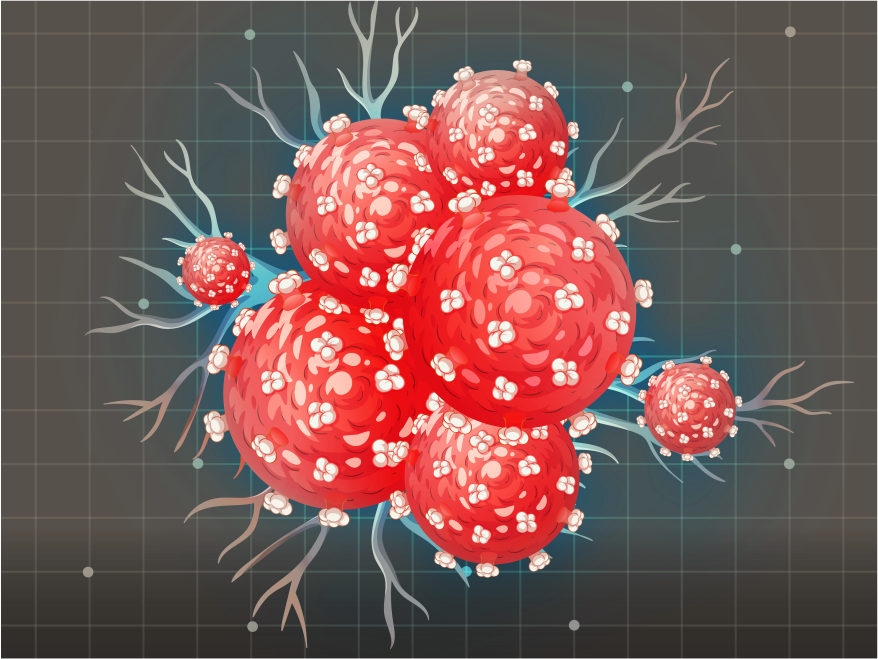
CANCER
Cancer is a term used for diseases characterized by uncontrolled division of cells, where the cells have the ability to invade other tissues of the body by direct growth into adjacent tissues (invasion) or by implantation into distant sites (metastasis). Cancer cells spread to other parts of the body through the blood and lymph systems. Normally, cells divide, replace old ones, and die in an orderly way, but when this process goes wrong, abnormal cells can form tumors. Tumors may be benign (non-cancerous and not spreading) or malignant (cancerous and capable of invading tissues and metastasizing).
Cancer is a leading cause of death worldwide, accounting for nearly one in six deaths. There are more than 100 different types of cancers which are named for after the organ or type of cell in which they appear. The most common cancers are breast, lung, colon, liver, ovarian and prostate cancers.
1. Breast cancer
Breast cancer is a disease in which abnormal breast cells grow out of control and form tumors. The cells begin to grow inside the milk ducts and/or the milk-producing lobules of the breast. breast cancer accounts for the highest number of cancer death in woman. Symptoms include breast lump, discharge from nipple or abnormal mammogram findings. Common breast cancer markers like CA 15.3, CA 19.9 and CEA are proteins released into the blood as cancer grows.
2. Lung cancer
Lung cancer is a type of cancer that forms in the tissues of the lungs, most often in the cells lining the air passages and is caused by abnormal cell growth. It is a leading cause of cancer-related death globally, with the main types being non-small cell lung cancer (NSCLC) and small cell lung cancer (SCLC).
3. Colon cancer
Colon cancer is a type of cancer that affects the colon, often originating from polyps, with symptoms that can include changes in bowel habits, blood in the stool and abdominal pain.
4. Liver cancer
Liver cancer is cancer that starts in the liver, with the most common type being hepatocellular carcinoma. Liver cancer can be primary in which the cancer starts in the liver or it can be liver metastasis or secondary, in which the cancer spreads from elsewhere in the body to the liver.
5. Ovarian cancer
Ovarian cancer is when abnormal cells in the ovary, fallopian tube or peritoneum begin to grow and divide in an uncontrolled way. Most ovarian cancers start in cells covering the ovaries and are called epithelial ovarian cancers. Other rare types include germ cell tumors, stromal tumor and sarcomas. Ovarian cancer releases several tumor markers, with CA-125 being the most common, used to monitor treatment and recurrence.
6. Prostate cancer
Prostate cancer is the uncontrolled growth of cells in the prostate gland, a gland in the male reproductive system. Prostate cancer is the most diagnosed malignancy worldwide and the sixth leading cause of cancer-related death in men. Diagnosis is primarily based on prostate-specific antigen (PSA) testing and transrectal ultrasound-guided (TRUS) prostate tissue biopsies. Newer diagnostic modalities include testing of free and total PSA levels.
Cancer markers are a group of proteins, hormones, enzymes receptor and other cellular products that are produced in higher-than-normal amounts by malignant cells. Tumor markers are usually normal cellular constituents that are present at very low levels in the blood of healthy individuals while during cancer the levels tend to rise abnormally in blood. Cancer mortality is reduced when cases are detected and treated early. There are two components of early detection: early diagnosis and screening.
The following are key laboratory markers used to evaluate and diagnose cancer: