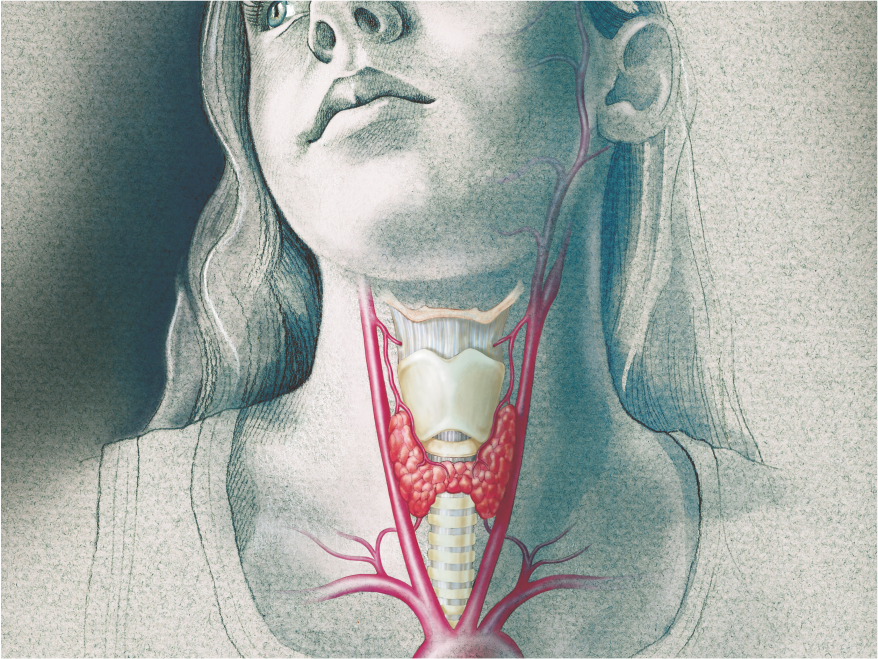
THYROID RELATED DISORDERS
Thyroid disorders encompass a spectrum of conditions arising from structural or functional abnormalities of the thyroid gland, which plays a critical role in regulating metabolism, growth and homeostasis through the secretion of thyroid hormones. Thyroid disorders are among the most common endocrine diseases globally. Their prevalence varies by population, iodine status, age and gender.
Thyroid disorders are broadly classified as:
1. Hypothyroidism
Hypothyroidism is a common endocrine disorder resulting from deficiency of thyroid hormones. It is a primary process in which the thyroid gland is unable to produce sufficient thyroid hormones. Hypothyroidism can also be a secondary condition in which the thyroid gland itself is normal but receives insufficient stimulation because of low secretion of thyrotropin (i.e thyroid-stimulating hormone [TSH]) from the pituitary gland.
2. Hyperthyroidism
Hyperthyroidism is a common thyroid disorder with multiple underlying etiologies. Hyperthyroidism is an excessive concentration of thyroid hormones in tissues caused by increased synthesis of thyroid hormones, excessive release of thyroid hormones or an endogenous or exogenous extrathyroidal source.
3. Thyroiditis
Thyroiditis is an inflammation of the thyroid gland, frequently caused by an autoimmune disease, infection or postpartum immune changes. Patients will have an initial phase of hyperthyroidism (thyrotoxicosis) attributed to the release of thyroid hormone from damaged thyroid cells. This is followed by hypothyroidism, when the thyroid stores are depleted and then eventual restoration.
Synthesis and release of thyroid hormones
Thyroid hormone synthesis and release are controlled by the hypothalamic-pituitary axis involving negative feedback control. Thyrotrophin-releasing hormone (TRH) is released from neurosecretory cells in the hypothalamus and travels through portal capillaries to the anterior pituitary where it stimulates the release of TSH into the general circulation. It is bound by TSH receptors in the thyroid gland which stimulate synthesis of the iodine pump in the follicular cells and the production of thyroglobulin (Tg) and thyroperoxidase (TPO), with the effect of an increase in the release of the thyroid hormones (T3 and T4).
The following are key laboratory markers used to evaluate and diagnose thyroid related disorders: